Sunday, January 27, 2013

Starbucks, United Kingdom Clash over Taxes

MarketWatch has the story:
...Mr. Cameron said companies must "wake up and smell the coffee" over tax avoidance... [Starbucks] has been criticized for not paying enough corporation tax in the U.K. Reports said Starbucks could suspend 100 million pounds ($158 million) investment earmarked for new branches in the U.K. due to the perceived slight...
This relates to a quandary that we've been discussing in class: mobile capital and the incapacity of states to capture it in a global economy.

The puzzle: Starbucks is a US-based multinational corporation that does a lot of business in the UK (and everywhere people are willing to pay $5 for coffee with milk). The UK would like to tax Starbucks' earnings (as most states do with most businesses). Starbucks, if it chooses to do so, can simply move its capital out of UK if it doesn't like the deal that Britain offers the multinational.

So, what is a state to do? How should the UK respond to Starbucks' threat to cease new investment if they are forced to pay higher taxes? Read the article and share your well-reasoned thoughts in the comments for participation points.

Monday, January 14, 2013

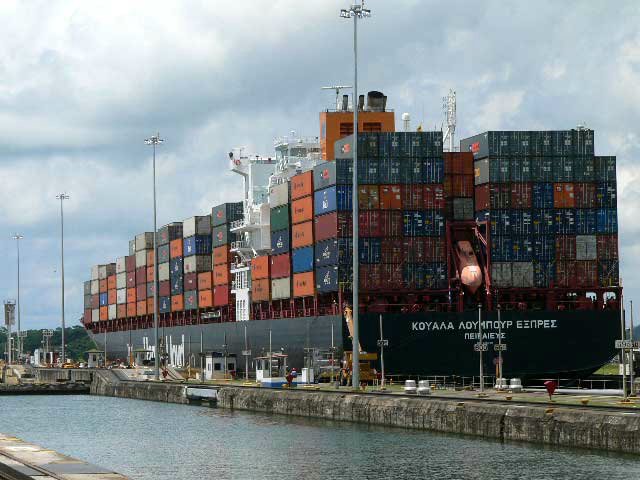
Public, Private Money Drives Innovation in Naval Commerce

Photo credit: Panama Canal
History Museum
A recent article in the Washington Post reports federal and local governments are pouring billions of dollars into ports to help them accommodate the new "post-Panamax" container ships.

A global public-private alliance is expanding the Panama canal to allow larger container ships to pass through. This will permit these massive ships arriving from Asia to call on ports on the US East Coast. At the moment, they dock on the West Coast and the cargo is shipped overland by road and rail.

This raises a question: if this commerce produces so much wealth, why should governments spend taxpayer money on these projects? Couldn't we just let the market take care of it? And if the market won't pay for it, is it something that taxpayers should pay for anyway?

Read the article, share your opinion and explain your answer for participation credit.

Sunday, January 6, 2013

Required Readings

Welcome to the Spring 2013 semester at Rhodes College. As we begin our IS 311 course, please make sure you have access to the required readings.

There are three textbooks. The first is Pietra Rivoli's Travels of a T-Shirt in a Global Economy, a fun examination of the political economy of international production and trade. Make sure you get the second edition.

The second is Jeffry Frieden's Global Capitalism, an in-depth and engrossing history of the global political economy since the start of the twentieth century.

The third is Nate Silver's The Signal and the Noise, a new book investigating the science of prediction from the man behind Baseball Prospectus and the NY Times FiveThirtyEight blog.

In addition to the required texts, make yourself familiar with the Readings tab at the top of this blog. This is where you will find the supplemental readings listed in the syllabus.